
Baseball strength and condition is unique. In order to heave a five-ounce ball or swing three-two ounce bat, the sport is primarily unilateral and rotational with high force production. It’s a power-driven sport with a focus on speed as much or more than strength. It also involves curvilinear sprinting.
Trainers need to account for S&C transfer to baseball and the specific demands of the sport by learning that basic exercises are necessary but not sufficient for baseball and therefore modify programming to include non-traditional approaches such as medicine ball throws and rotational cable pulls to train rotational power. This article covers some key training points from some of the top baseball-specific strength and conditioning experts. Note that I’m not a trainer or medical professional, so please consult with them before trying any of these ideas I’ve aggerated from others.
Unique exercises for baseball players
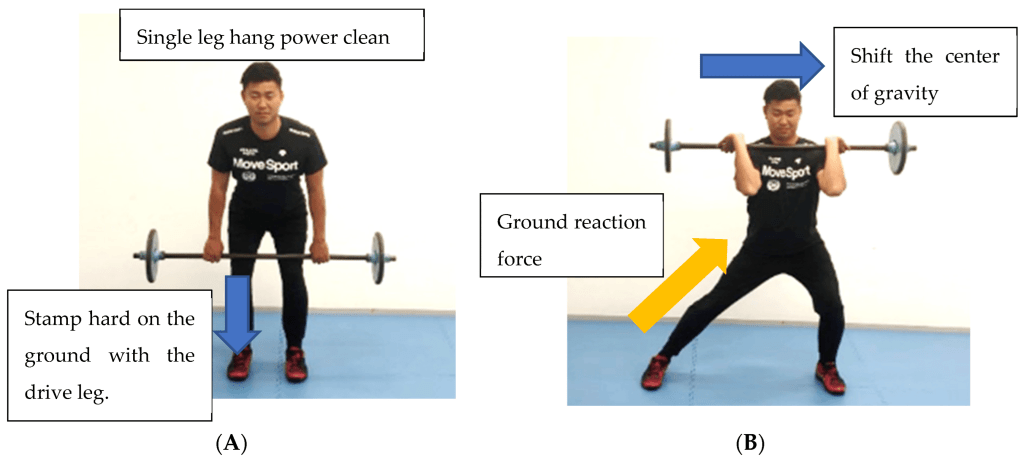
Baseball is predominantly a single-leg drive sport with high demands on the core and back for hitters and core and shoulders for pitchers. As a result, the typical football strength program design with cornerstone exercise like bench and back-squat are not as useful for baseball players. The unilateral leg exercises heiden jumps (aka skaters) and reverse lunges (though less rotational) are good examples of valuable additions. Heiden jumps strengthen hip abductors, which enable hitters and pitchers to have a powerful drive leg. You can also get the same effect using a slide board. Reverse lunges strengthen pitchers’ plant legs to absorb the force created a foot strike. Additionally, a modified hang clean (see below) can also create more baseball specific lateral movement valuable to both pitchers and hitters.
Injury prevention modifications
Baseball training also requires some adjustments from traditional training to protect arms and spines, which take the most stress from the sport during throwing and hitting respectively. Goblet squats can replace traditional back squats to lower pressure on the spine. Front squats are less of an issue. Landmine presses can do the same as an alternative to military presses to better protect the rotator cuff from impingement. Eric Cressey did an interesting podcast on whether pitchers should bench, which can pressure elbows, and offers alternative exercises. Trend Athletics answers the question of whether pitchers should train overhead at all. Baseball Development Group explains why curls should be part of thrower’s conditioning to limit arm injuries.
Offseason vs in-season training
As it is for most sports, the off-season is a key time to recover and rebuild strength. The Baseball Strength and Conditioning Society provides an offseason workout for baseball players and another offseason program recently published in a medical journal. The journal shares that lateral to medial jump performance and medicine ball scoop throws are correlated with throwing velocity. The BS&CS also outlines what exercises baseball players should do. Cressey also has some great advice on how to change training throughout the year. In-season training requires some modifications because of the stress games put on the body. Zach Duchant from TCU offers in-season training tips and a podcast overview of his key baseball training points.
Hitting strength training
Bat speed is critical to hitters. Lean body mass, top hand grip strength and back strength are key drivers of swing speed. A reverse medicine ball throw is an example of a baseball-specific exercise for improving back strength. David Szymanski is one of the leading baseball researchers. His work points to the rotational focus of medicine ball training and under/overload bat swings as contributing to bat speed improvement in a way that traditional strength training doesn’t. Additionally, Cressey’s view of forearm, wrist, hand strengthening is interesting especially the use of Indian clubs. Start at 16:40 in the podcast.
One hitting hack to increase bat speed is to do four five-second isometric holds that simulate a swing at the point of contact. Additionally, doing the exercise six minutes before hitting also improves bat speed in games. This activity primes muscles using the concept of PAP. PAP helps with explosiveness for other movements as well like a vertical jump as muscles recover from exhaustion. You can read the details of the study if you want to learn more.
Pitcher strength training
Pitchers need additional strength training for the rotator cuff and forearm muscles. Tread Athletics provides an in-season guide for high school pitchers with many of the exercises. Uniquely, two finger pinch grip strength can be helpful for preventing elbow injuries. A similar exercise with bands to protect the ulnar deviation is also worth the time.
Baseball speed and agility training
Baseball also requires curvilinear speed to run around the bases, so curvilinear sprints are needed to train a different type of running from the typical linear variety. For sprinting, running backwards is also a useful variation to increase speed, so look at backward programming ideas. Bounding has also been shown by research to improve sprint speeds. Though not specific to baseball, Yuri Verkhoshansky, a leading S&C researcher, created jump progressions to improve leg power production.
Additional resources
Cal Dietz is one of the top S&C trainers in the country. He wrote a book on his method called Triphasic Baseball Training. He also has a unique central nervous systems training drill called the GOAT performance drill that’s worth trying out. Simplifaster also offers a guide to upper body training for baseball and Driveline lays out their recommended baseball exercises.
Updated: January 14, 2024
 Monster Baseball
2 thoughts on “Strength Training Exercises for Baseball”