
The 60 in Baseball
One of the five tools in baseball is speed. While the 40 yard is the standard for the NFL, baseball took a different path. For whatever reason, it has always used a 60-yard sprint time as its benchmark for speed. The 30-yard would make more sense to match the distance between home and first, and is used by some organizations like USA Baseball for its combine, but the shorter distance still hasn’t become standard across showcases. If you’re planning to run the 60, start by reading the top book about baseball training to prepare yourself and improve your time.
Let’s dive into some intriguing data I’ve unearthed from high-level baseball showcases. But first, a quick heads-up: This data isn’t your everyday collection of statistics. It represents young athletes who are so passionate about the sport that they (and their supportive parents) are willing to invest in their dreams at a national showcase. Many of these players are on the path to college baseball, so it’s a pretty elite group. And yes, a few pitchers who aren’t big on running might be missing from this data.
Analyzing the 60-yard Data
The trend? No surprise…speed picks up with age! Starting at roughly 7.6 seconds at age 14, they reach an impressive average of around 6.8 seconds by age 18. But here’s the kicker: the crème de la crème, the speedsters of the game, dash below 6.5 seconds by the time they’re tossing their graduation caps! A select few even touch the 6.2-second mark. Michael Gupton set the record at 5.96 s. These players will likely end up roaming centerfields at some of biggest stadiums in the country.

60-yard Improvement with Age
Looking at the results another way, the improvement in sprint performance in a regression gives us this view. This is more granular to age in months and shows how even a few months difference in age can impact player performance. On average, players shave off about 0.2 seconds from their 60-yard sprint each year. Interestingly, the improvement doesn’t taper off at age 18, so there appears still room for additional gains going into college or the pros.
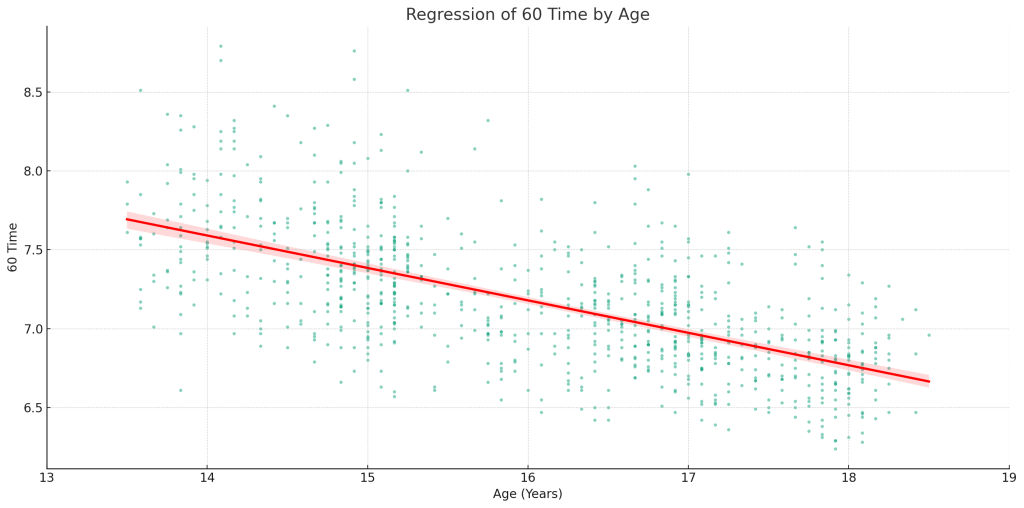
This view also shows how baseball reclassing gives older players a distinct advantage compared to younger ones. On this point, see the earlier post about the relative age effect in youth baseball.
The Takeaway
Whether you’re a coach looking to guide your team or a parent cheering from the stands, it’s clear that speed is a game-changer, especially for outfielders. As players grow and train, their speed metrics can provide invaluable insights into their potential and progress. For a more extensive discussion of speed, listen to BA’s podcast on scouting speed and athleticism.
If you want to build strength for the sprint, buy the top book about baseball training and track your progress with gates.
 Monster Baseball
8 thoughts on “Speed in High School Baseball: 60 yard Sprint Times by Age”