
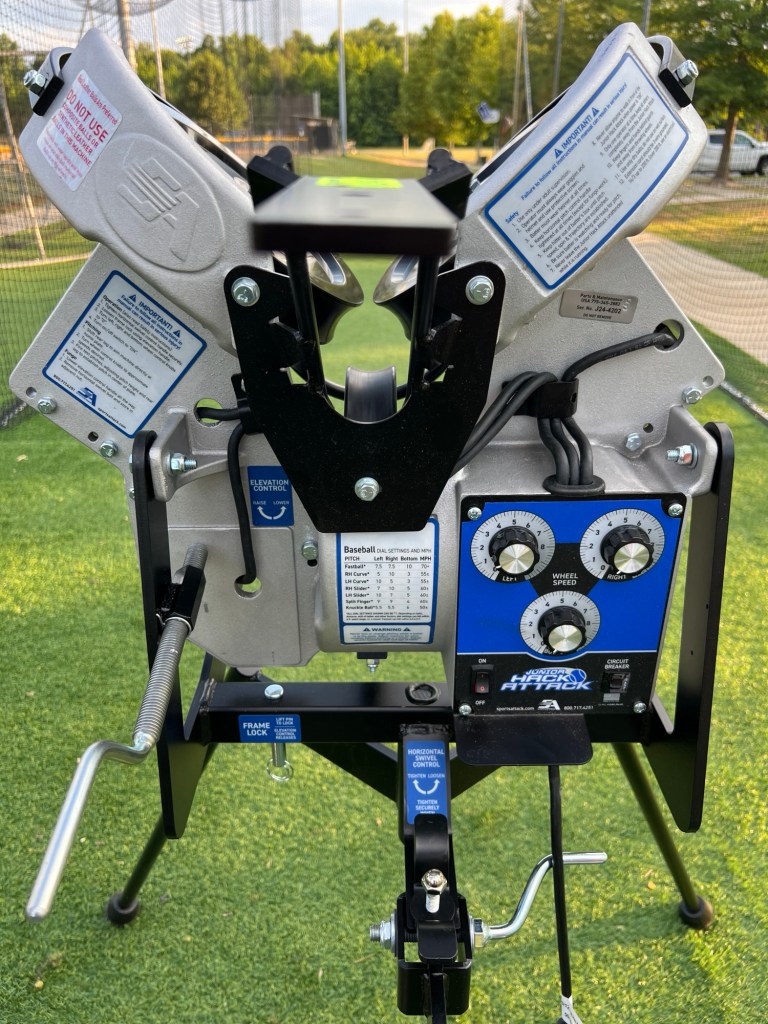
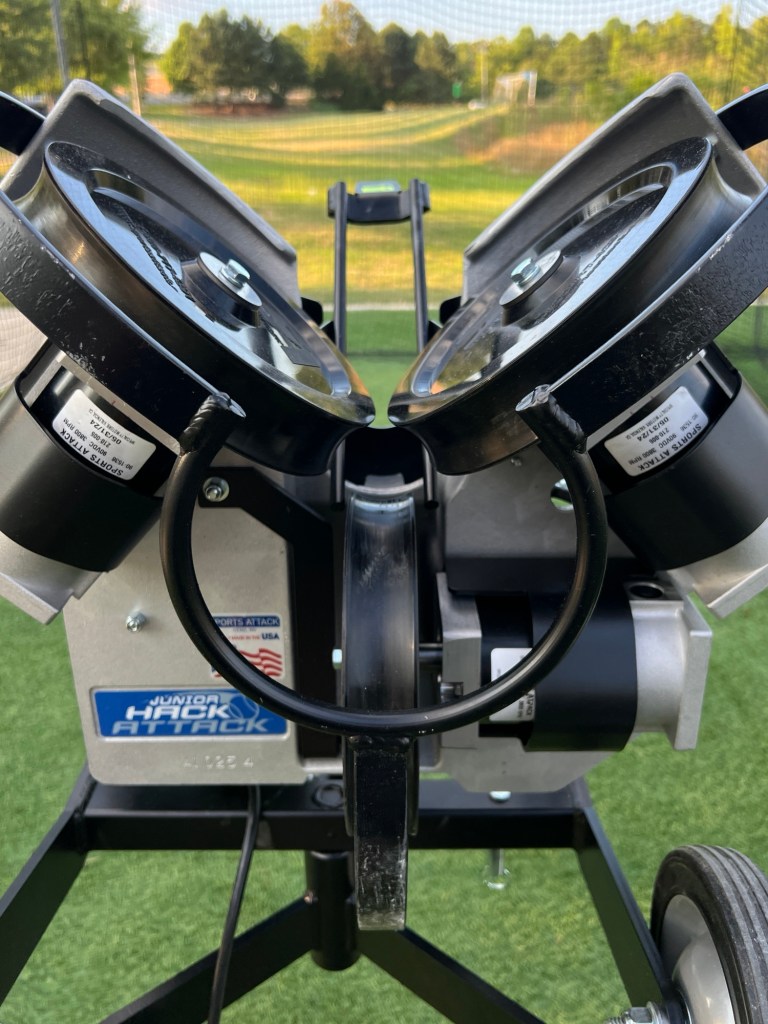
The Junior Hack Attack is one of the most popular three-wheel pitching machines available. I highly recommend it because it balances affordability, mobility, durability and functionality. To start with, the pitching machine runs around $2,600, which is about $900 less than the full Hack Attack, so it’s one of the most affordable in the market. The tradeoff is that the Junior maxes out around 70 mph vs ~100 mph for the regular Hack. If you use Heaters Sports balls, the machine can reach over 80 mph. In order to simulate speed over these levels, you’ll need to shorten the distance from 60 feet to whatever is needed to reproduce the velocity required. There are conversion charts to help with the set-up.
Mobility
The Junior weighs about half as much at ~80 pounds, which makes it possible to be moved in and out of a car reasonably easily by two people. It’s small enough for the back of a small SUV and could fit in the trunk of many cars, though could be a bit awkward to get in and out. The base package comes with short legs, but you can buy taller ones for $200 that add about a foot in height to the release point.
Set-up, Pitch Type and Location Adjustment
The machine can be set-up in less than a minute. All it requires is to have the three legs to be snapped into place and then the machine tipped up on to them. After this, just plug it in to a normal power outlet and you’re ready to go.
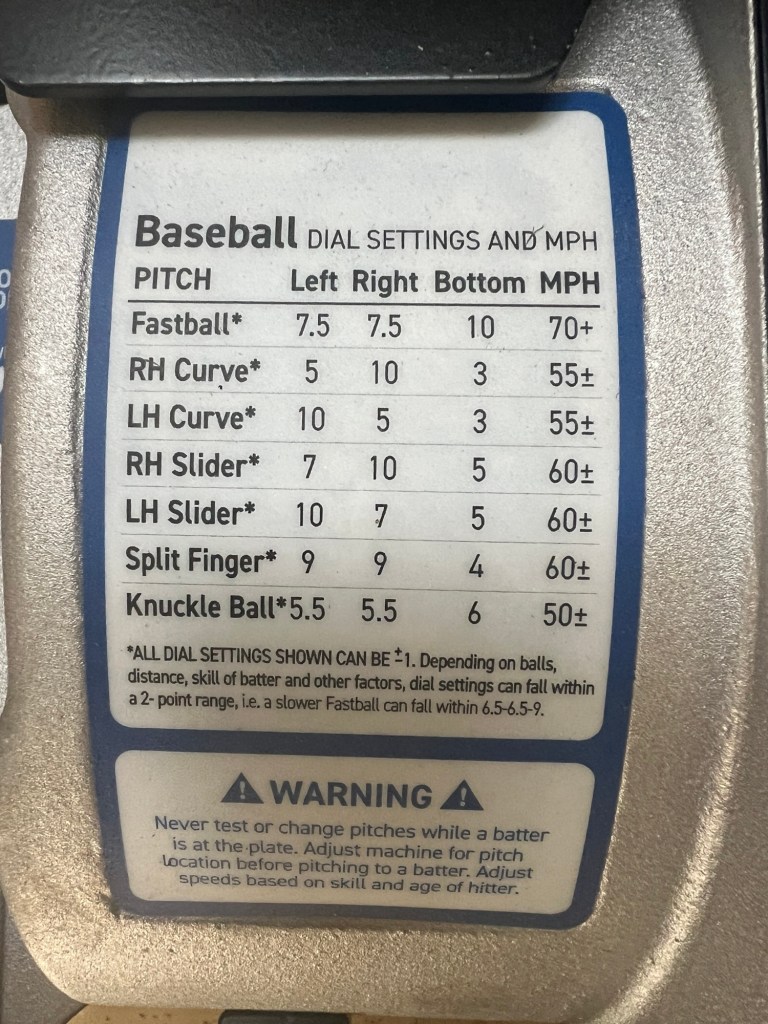
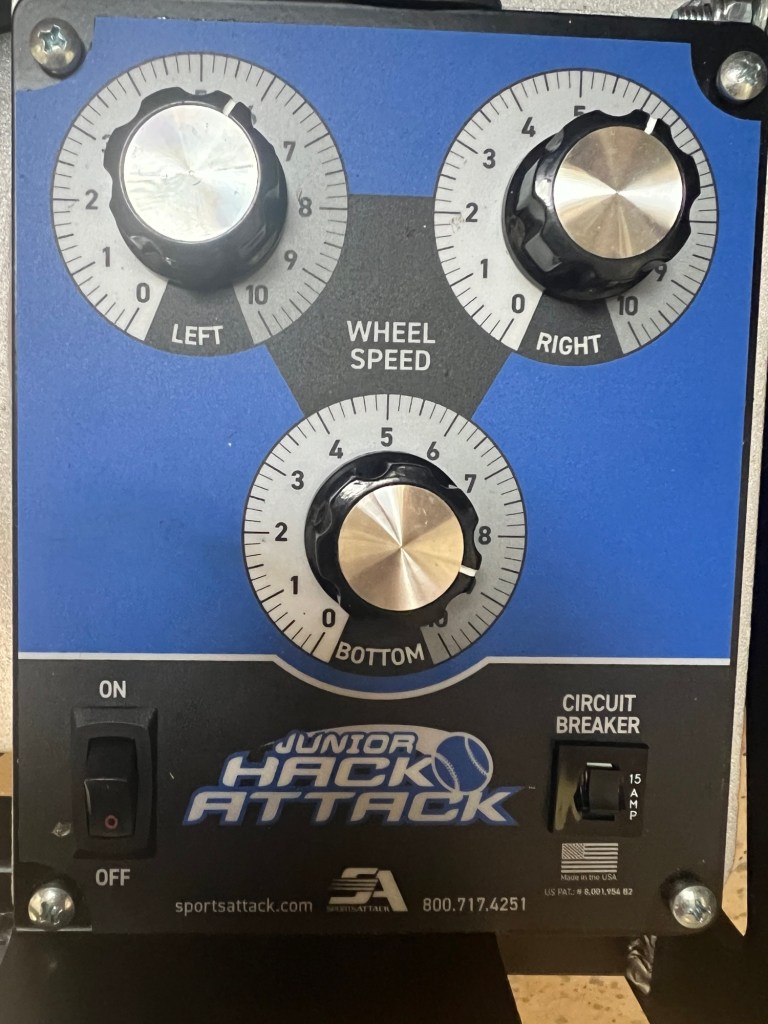
The Junior Hack Attack will throw any type of pitch you want from breaking balls with different shapes to a splitter or a knuckleball. The machine has a guide to the settings on the back that you can easily reference to change the wheel speeds. Using Heater Sports balls creates more movement because they’re much lighter.
Pitch location is easy to adjust with two levers – one for up and down and there other for left and right. The machine is fairly consistent in its location, but wear on balls can add more variability to a ball’s path.
Fielding Work
The machine can be used for ground ball practice by removing the legs and putting the machine on the ground. Likewise, fly balls will carry north of 250 feet at full power. You can simulate top spin, back spin and side spin balls to give challenge outfielders with different reads.
Comparison to Jugs
I looked long and hard before finally landing on the Junior Hack Attack. I think the Jugs construction may be a little more premium, which is reflected in its price. The new Jugs mini3 is $400 more than the Junior Hack. Unlike Jugs machines, Hack Attack allow you to control each wheel individually, so you can adjust the speed and shape of pitches. With Jugs, you’re limited to their preset pitch types. Additionally, with jugs the wheels are the wheels, so if they get cut up rolling on the ground it’ll affect the pitch. Hack Attack has a different set of wheels to move the machine than those that throw the pitches.
Summary
Overall, the Junior Hack Attack is highly recommended for the overall value it brings with its functionality, size and cost. I’d buy it again and am considering getting another to do mixed batting practice.
Next, learn about the ProVelocity Bat.
 Monster Baseball
4 thoughts on “Junior Hack Attack Pitching Machine Review”